A Soft Landing
In conversation with Jane about moving young, growing slowly and learning who you are along the way.
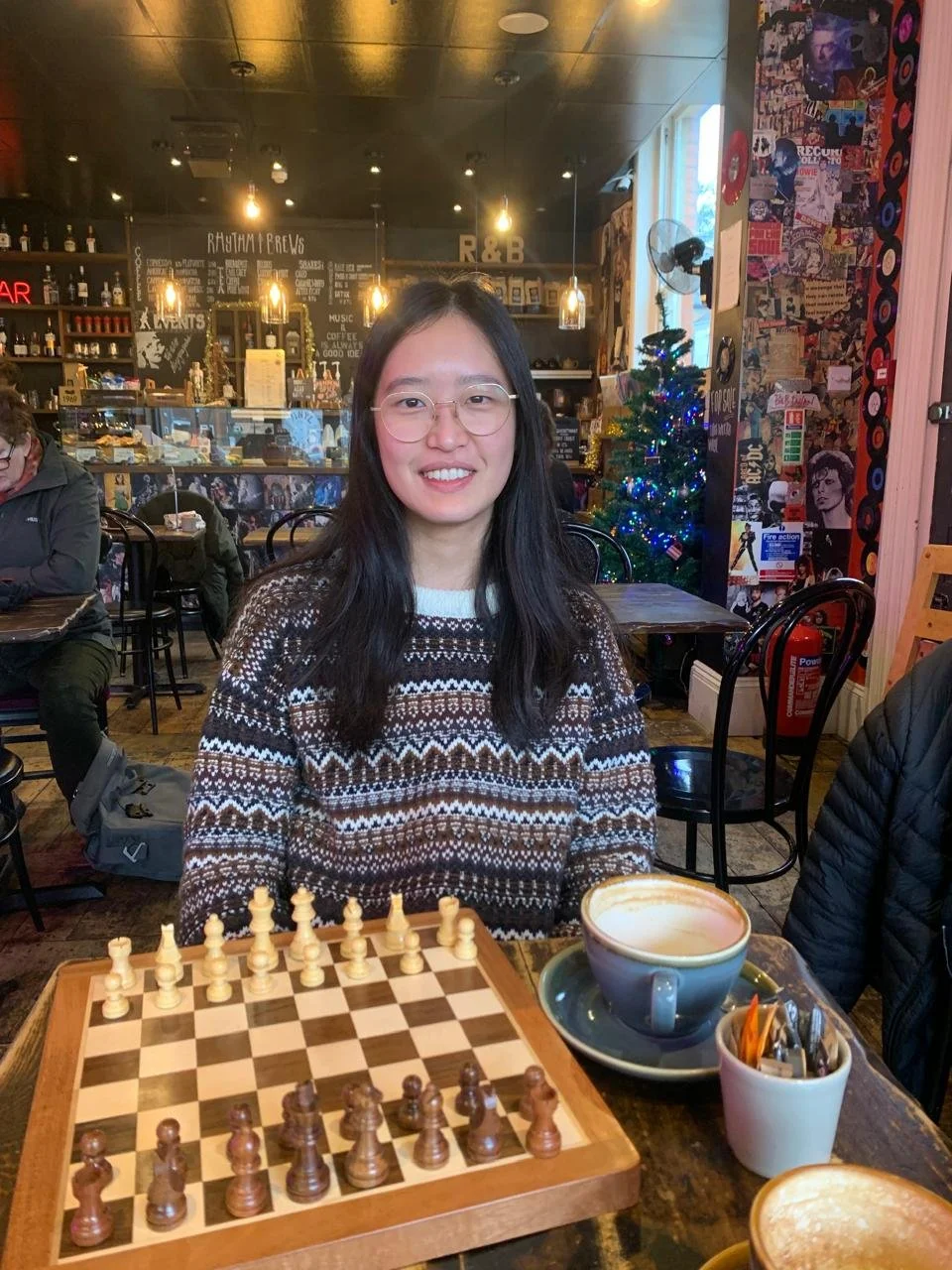
And losing a chess match to her, while at it.
Ok, here we go. My first question is, how did London first come to your mind? What made you choose it over any other place?
So, in the beginning, when I came to the UK, I actually first went to Oxford (wow, that’s very nice). I did my A-levels there. I was 17 at the time.
Is A-Levels Bachelor's?
It’s before Bachelor’s, the last few years of high school. And I think I chose a couple of schools, and my parents approved. They liked the school, I was studying films, and then I came to London because of university. I got into the University of Westminster, and I came here.
And how was life for you in Hong Kong before moving here?
I would say I had spent my life in Hong Kong, so I don’t know what else it could have been like. Looking back, I remember those days very fondly. I had fun. I enjoyed going to school and everything was very peaceful. But obviously, that’s just how things were, when you are a teenager. You don’t really know about the world yet. Everything is nice, it’s a bubble. But it was a huge contrast to when I came here. Everything was so different. It’s like society is different. The culture is really different. So yeah, I had a hard time adjusting. I think in Hong Kong, the culture and society are very homogeneous. There is not a lot of diversity. Everything is the same for everyone. I think in Asia as well, the culture is a lot more conformist. There weren’t a lot of people who were trying to do things differently. Everyone went to school, everyone was studying for their exams. Everyone’s dreams and ideas are the same, they need to get to a good university. It’s very much about going with the majority; that’s the vibe, the culture.
Yes, I think that’s something I can understand. Asia has that in common. There’s a lot of focus on education and building the traditional successful life. Once you arrived here, what is something that surprised you the most, other than it being very multicultural? I think it’s also such an exciting age to come here, since it’s a cultural hub, and be exposed to the real world. What felt familiar and what felt very different?
I think when I first came and went to school in Oxford, I didn’t really understand a lot of things and struggled to connect with people. So everything felt really different. I think one thing that shocked me when I was 17 was how much people smoked. All the other 17-18-year-olds, like literally half of the whole school, would be smoking during breaks, and it wasn’t a university thing but a cultural thing. People considered it cool. Now they don’t smoke, they vape instead.
Did London live up to the version you had imagined, or was it less to do with imagination and more of going with the flow?
I was just clueless and I didn’t really have any expectations, so I just came, I was dropped in, and I tried to survive and make sense of everything. Before, I didn’t know what it meant to move my whole life to a different place. I don’t think any of us know what it’ll be like before you actually do it. But once you do it, then it’s like, you are in it now, and you have to try different things (I think that’s true, no matter what age you move).
What was student life like for you as an international student in London?
I think I mainly mixed with other international students. I found it easier to be friends with them. And I think we were all exploring London together for the first time. I found that there were a lot of shared experiences. All these years later, I’m still in touch with many of them. It’s the first time since coming to the UK that I felt a little bit of belonging, or you know, finding friends that I was close to with common interests. And it was fun. I think that I didn’t really do a lot of crazy stuff, but I think I still had a good couple of years at uni. I had fun in my own way.
Were there moments where you felt more like a foreigner than a local?
At the beginning, things were hard. I’m a very shy person by nature. So it was hard for me to come out of my shell. I think I was also homesick. It was a lot of different factors that made being social difficult. And then I found it much easier when I went to uni. I started to get a better grip on what the culture is like in the UK. Nowadays, I work with a lot of British people. There are always certain cultural references, jokes, phrases and sayings that I still don’t fully understand. Even though I have improved hugely since moving here, I feel it takes a lot of work to be able to really get to the same level as the locals, to have a sort of fuller understanding of the culture here. For example, I tried to watch a lot of films and TV that were made in the UK. When I was in my A-levels as well, because I also studied a little bit of music, music tech, and maths and psychology (nice, you nurtured both your left brain and right brain).
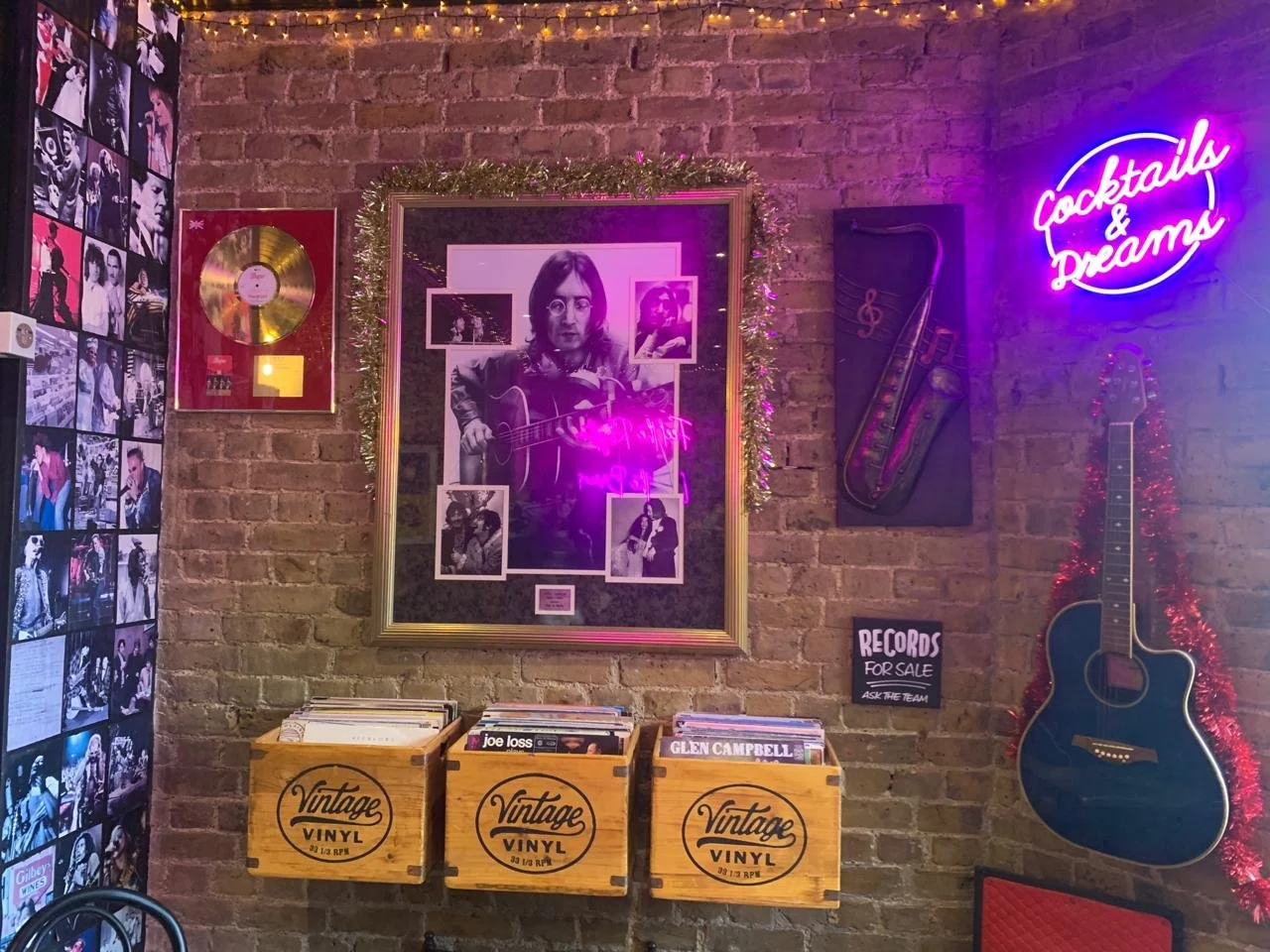
A musical tribute at a local cafe.
I realised I knew little about music or what people listen to, like pop music, rock, jazz and the history of all of these genres of music. Music in the UK is really rich, and there is a very strong legacy and influence on the rest of the world. With films as well. I feel that even now, I’m a bit out of touch, because I didn’t grow up here. So there are lots of places where I feel I’m left out of the conversation because I wasn’t exposed to the same art and culture.
I think you’d still be ahead of the curve because no one can watch all the TV shows being produced today and also because of your genuine interest and background in films and music.
Yeah maybe.
Do you think your relationship with Hong Kong changed once you started living here? Did your parents also move with you? You mentioned they live here now.
Yeah, so I came here in 2013 and my parents came in 2021. They came for a couple of reasons. There was civil unrest in Hong Kong, a lot of very upsetting political changes, and many people have been leaving since that happened. It was around 2019, and my family are pro-democracy. We believe in free speech. We are devastated that things are happening the way they are. The Chinese government just had a complete crackdown of everything. There is no more democracy, no more free speech. Everything had to be pro-government. They arrested everyone who was opposing the government (I remember the large-scale protests). So my family already happened to be British citizens. I don’t know when exactly they applied for citizenship, but they got it, so it was no hassle for them to come to the UK. Because I was already here, they chose here, but they are now living in Croxley, which is near Watford. They also chose that area because I knew someone who lives around that area. I feel my relationship with Hong Kong was still good in the 7 years before my parents came over. Every year I would go back and visit home and visit my family. But since they came here, I started to feel less of a connection to home. And I think it’s a complicated question, my feelings for Hong Kong. I was just thinking about that a few days ago, because so much has changed in Hong Kong in the last 5 years. In a lot of aspects, I feel it doesn’t feel like home anymore. Not just because of the politics, but because in our personal lives, like my family has changed a bit as well. And one of the key things for me is that we had a flat in Hong Kong. It was the flat I was born in. I have been living there my whole life. And my parents had that flat for 26 years and when they chose to come here, they had to sell the flat, in order to buy the house here. So that place is no longer there, it’s gone. And that makes me really sad (that’s a deep-rooted connection, especially if you are born there). Yeah, it is. So now every time we go back to Hong Kong, we have to stay in a hotel. And every time I do that, I feel like I’m a tourist in my own country. I don’t really feel that much of a belonging. I think it’s become more difficult since my family moved away. But for my parents, I think they are still very connected to their siblings and their nephews and they are much closer to my extended family, which makes sense because they were in Hong Kong for 60 years.
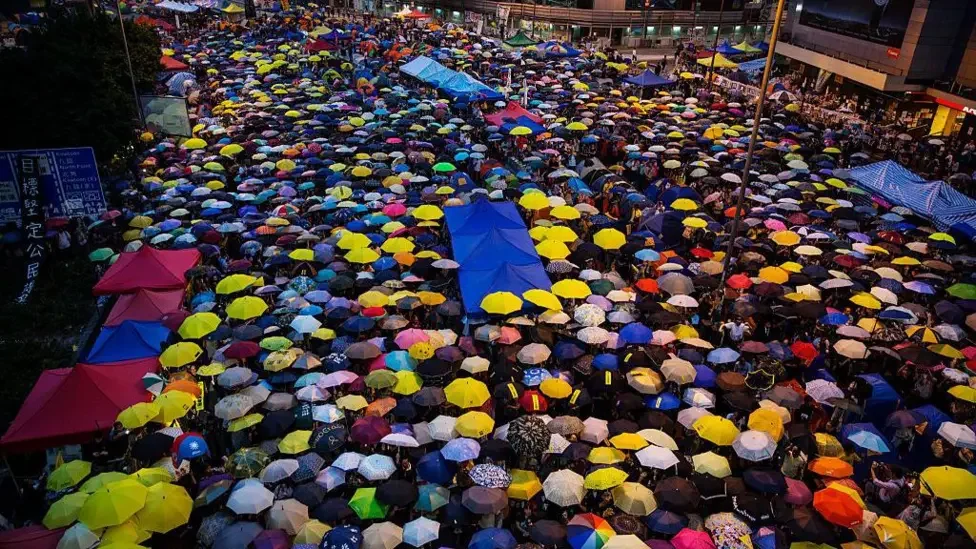
Umbrella Movement in Hong Kong during the 2014 protests. Source: BBC
When did London start feeling like home?
I don’t think there was a specific moment. It was quite gradual. I think that maybe when my parents moved here, it felt slightly more significant because my parents bought a house that offered stability. Even when my family first came here, things were quite uncertain, especially with my brother as well. He didn’t have a job, he didn’t know what to do, he was really lost about his career. Things were still uncertain, and when my parents came over, I moved back to live with them for 2 years and then I was like, you know what, I actually prefer to live by myself.
I think that’s the best of both worlds, when you are living independently and have family living close by.
Yeah, and I met my flatmate, Ines, and we found a flat together. We started renting this place in Acton, and after a year the landlord wanted to sell the flat, and we were going to have to move out. But then I spoke with my parents and they said they’d like me to have a place of my own someday, and I would love to get a flat. They helped me a lot and I bought a flat 2 years ago (congratulations, that’s such a big deal). Thanks. That was a very good step. I got a mortgage, it felt like a really adult thing.
That’s a big milestone I feel and something to be so proud of, as an independent woman, especially. I think so many people associate it with a life stage for women. I remember Priyanka also talking about it and I think it’s such a cool thing.
Yeah, I think a lot of people that are around our age, if they become homeowners, it’s most likely because they have a partner. Like two people buying a house together becomes a lot easier (yeah, it’s also a practical concern). It’s two people’s money. I feel because my parents gave me a chunk of money to pay the deposit, I could afford it, and without that support, I wouldn’t be close to buying a place. They really helped me, and that step was like a confirmation that yes, this is my home now and that I’m going to be here for good (that’s as solid as it gets, I think).
Which brings me to my next question related to this. What does belonging mean to you today, something you had mentioned earlier?
That’s a deep question, quite philosophical. I think I used to think that belonging is to be like a chameleon. So there’s a group of people and you just blend in with them. And for a long while, I thought that’s what I had to do to survive. Not survive, that’s a bit too dramatic, what I had to do to be accepted. But as I grew up, I realised that that’s not true at all and I should be my own person. I should have my own views and my own personality, instead of just blending in and being a blank sheet of paper. But I still struggle with that sometimes because it’s my tendency, like I’m more of a person who tries to blend in, and I want other people to like me (I find that so relatable). More recently, maybe in the last couple of years, I’ve started to become a bit more sure of who I am, understand my preferences better, not go with the crowd. I think that, especially, joining the chess group has helped me develop a sense of belonging. It is very open, everyone is welcome, and there is no judgement or pressure to conform. I think that’s how things should be. I think at other points of my life, I felt a lot of pressure to conform, even in Hong Kong, which is a very conformist place. But now, I finally feel like a bit more of an individual. Being an individual doesn’t mean that you don’t belong, it’s quite the opposite, I think.
That’s a great answer and also very true. I think the chess group was the first social group of sorts that even I joined on moving here and it brings me a lot of comfort. Ok the last few questions now. Are there parts of the city that feel tied to specific chapters of your life, or a place here that particularly feels yours?
I guess my flat, it feels like it’s really mine and a little place I like. My parents’ place. But all of the other places I’ve lived in, I don’t really have an attachment to them, because I did move around a lot, like in uni, I was mostly in Northwick Park in Harrow, where the uni was.
Do you think migration is something that ever truly ends?
There’s always the potential of moving to another country for work or say, if I meet someone that I am in love with and decide to move somewhere to live with them. And even if you already have a family, people still migrate, so it never really ends. Also, I’m not at the stage where I’m tied down to a certain place. It could still happen.
Is there something that people should understand about it that is often not talked about?
Something that just randomly popped into my head is that there is a sort of white superiority (that’s coming back into this world with governments moving to the far right and promoting white supremacy). I think there was a part of me, maybe before I moved even, when I was quite young, when I watched films or when I encountered western culture, that would make me feel like their stuff is better than my stuff. Even when I first moved here, I think I had a deep-rooted bias. And even for myself, thinking that white culture is better than other cultures or things like that. But I’m not doing it on purpose. It’s just something that I unconsciously internalised. There are a lot of such biases, that I think I had internalised for a long time. Being a woman as well as a minority, I had to unlearn those things to empower myself. I think that I’m lucky that most of the people around me are very supportive. They believe in equality, everyone having a voice and respecting each other. So that has really helped. And I think London is a very liberal place. I didn’t feel like I was discriminated against, but it did take me a while to unlearn certain things, like I shouldn’t feel small and insignificant because I’m different. I think people who have just migrated, they tend to still have a lot of these biases. But it’s also an age thing, maybe the views of the older generation are a little different. They have learned certain values over their lifetime that’s harder to change, whereas I accept things as given. So yeah, after moving here, I realised that there is a lot of unconscious bias and that perhaps in Hong Kong, there is a bit more racism and a lot more cultural bias. I was talking to Ines the other day about body shaming. In Hong Kong, if you are fat or overweight, you get bullied, you get called names. It’s very intense, the level of bullying you get, and it’s considered ok, like people get away with this kind of thing because the culture is that everyone is very skinny, everyone has to look a certain way. Whereas here, it’s considered wrong and you shouldn’t really do that to people. There are a lot of clashing values people don’t really talk about, and I think people moving toward the right wing is also because of so many of these unconscious things, these biases that don’t get talked about. People are blaming everything on the immigrants and stuff like that because a lot of these biases don’t get addressed ever, in society.
Thank you, that’s such an honest answer. I think about these things a lot as well. A lot of what you said is so true, and it happens. Maybe it’s also how the media we were exposed to influenced and shaped us. Last question now, you’ve been so patient, thanks. What does London represent to you in one sentence (or more)?
I think I’m still not 100% sure if London will be my forever home, because I’m still open to moving elsewhere at some point in the future. But for now, I can say that it’s a familiar place because I’ve been in London for 10 years. I know it quite well. There are places that I like to visit frequently, which makes me feel nice. I like being in places with lots of opportunities and lots of things to do, so it’s like if you are ever bored, you can always go somewhere, there are activities, museums and so many things to do. It’s like a melting pot of art and culture, that’s what I really like. And I’m also grateful for London, because it taught me a lot of things, how to be myself and how to accept other people.
Thank you so much Jane for your time and for your genuine, straightforward answers.
